
Encyclopedia of Human Nutrition – 4th Edition: The Definitive Global Reference on Nutrition Science, Health, and Sustainability
Introduction: Why Human Nutrition Matters More Than Ever
Human nutrition today sits at the center of some of the world’s most urgent conversations—chronic disease prevention, child and maternal health, food security, climate change, and sustainable development. As science advances, nutrition is no longer viewed simply as the study of calories and vitamins, but as a complex, multidisciplinary field that connects biology, medicine, agriculture, genetics, and public health.
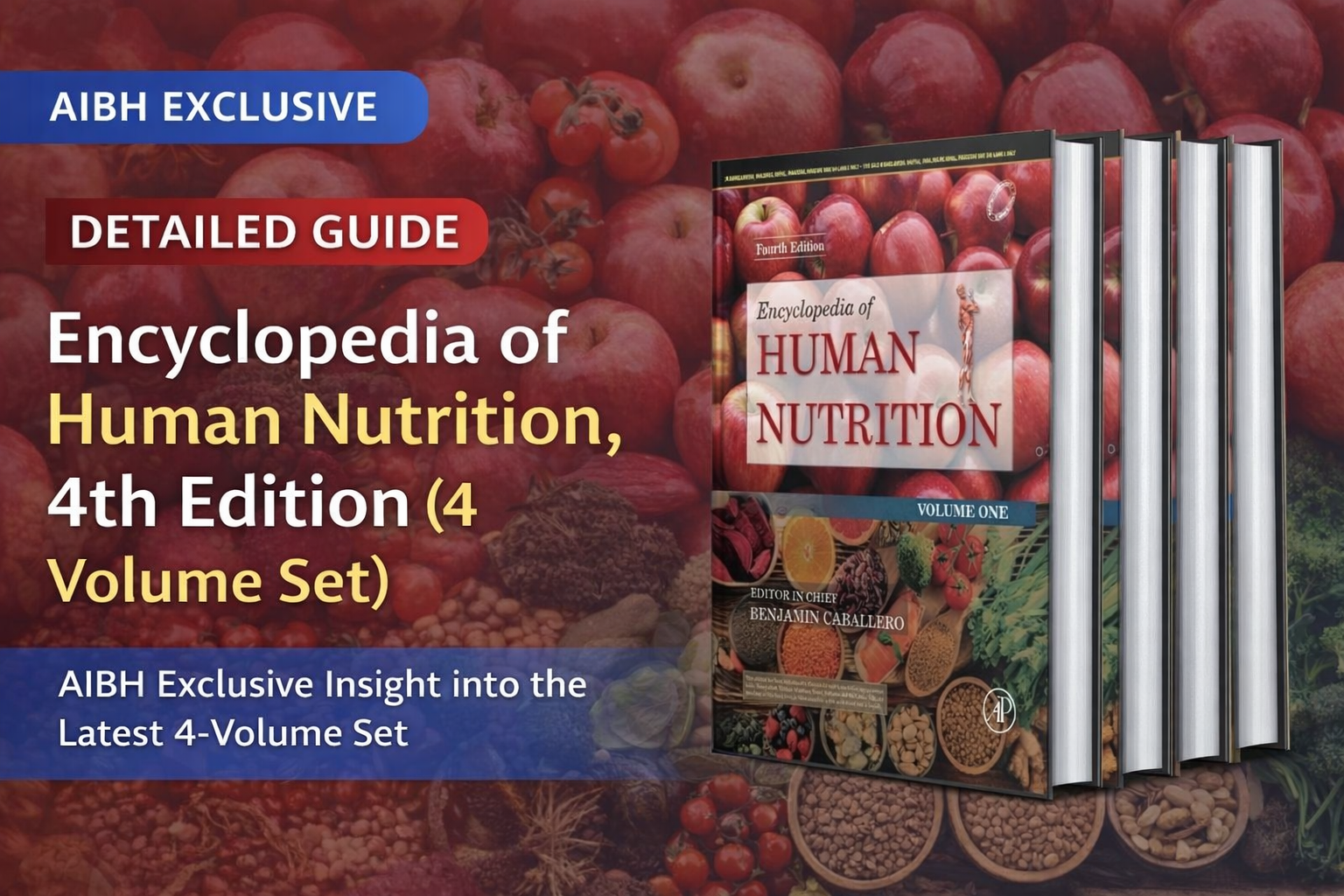
In this evolving landscape, the Encyclopedia of Human Nutrition stands as one of the most authoritative and comprehensive reference works ever produced in the field. Published in 2025 by Academic Press, this four-volume set offers a modern, global, and deeply scientific understanding of nutrition and its impact on human health and disease.
Edited by Benjamin Caballero, a globally respected leader in nutrition and public health, the fourth edition continues the encyclopedia’s legacy as a single, integrated source of knowledge covering food systems, nutrition science, and clinical nutrition. For researchers, clinicians, educators, and policymakers, this work is not just a reference—it is a foundation.
A Landmark Reference in Nutrition Science
The Encyclopedia of Human Nutrition has long been recognized as one of the most trusted resources in the field. From its earliest editions, it set out to do something ambitious: bring together all major aspects of nutrition into one cohesive, accessible body of knowledge.
The Fourth Edition builds on this vision while fully embracing the realities of 21st-century nutrition science. It reflects how the field has expanded beyond classical nutrient deficiency models to include chronic diseases, molecular biology, personalized nutrition, global food systems, and environmental sustainability.
With nearly 2,600 pages of expertly curated content, this edition offers a panoramic view of nutrition—one that is both scientifically rigorous and practically relevant.
What Makes the 4th Edition Especially Important
Nutrition science has undergone dramatic transformation over the last decade, and this edition captures that change with remarkable depth and clarity.
One of the defining strengths of the Fourth Edition is its integration of modern biological sciences. Readers will find extensive coverage of emerging areas such as nutrigenomics, metabolomics, and the human microbiome, helping explain how nutrients interact with genes, metabolic pathways, and gut microbes to influence health outcomes.
Equally important is the encyclopedia’s focus on diet-health relationships. It explores how dietary patterns contribute to diseases of recognized nutritional etiology, including obesity, diabetes, cardiovascular disease, micronutrient deficiencies, and metabolic disorders. Rather than presenting isolated facts, the content emphasizes mechanisms, evidence, and real-world implications.
A Truly Interdisciplinary Approach
One of the reasons the Encyclopedia of Human Nutrition remains unmatched is its interdisciplinary scope. Nutrition does not exist in isolation, and this work reflects that reality.
The Fourth Edition includes contributions from experts across disciplines such as:
- Nutrition science
- Medicine and clinical nutrition
- Food science and technology
- Biology and physiology
- Agriculture and food systems
- Public health and policy
- Environmental science and climate change
Chapters are written by leading academics and practitioners from around the world, ensuring that the content reflects global perspectives, not just region-specific practices. This makes the encyclopedia relevant to readers across continents, cultures, and health systems.
Global Context: Nutrition, Sustainability, and Climate Change
A standout feature of this edition is its strong emphasis on global nutrition challenges. As the world grapples with climate change, population growth, and food insecurity, nutrition science must address questions that go far beyond individual dietary choices.
The encyclopedia explores critical issues such as:
- Sustainable food production
- Environmental impacts of dietary patterns
- Climate change and food availability
- Global malnutrition and undernutrition
- Nutrition transitions in developing and developed countries
By placing nutrition within a broader ecological and socioeconomic framework, the Fourth Edition equips readers to think critically about the future of food and health on a planetary scale.
Clinical Nutrition: Bridging Science and Practice
For clinicians and healthcare professionals, the Encyclopedia of Human Nutrition offers an invaluable bridge between basic science and clinical application.
Topics related to clinical nutrition are presented with clarity and depth, covering nutrient requirements across the lifespan, nutrition in disease states, and therapeutic dietary interventions. The content supports evidence-based practice while acknowledging the complexity of individual patient needs.
This makes the encyclopedia especially useful for physicians, dietitians, nurses, and public health professionals who need reliable, up-to-date information to inform patient care, policy decisions, and research initiatives.
The Editorial Leadership of Benjamin Caballero
The strength and credibility of the Encyclopedia of Human Nutrition are closely tied to the leadership of Professor Benjamin Caballero. With over two decades of experience as a researcher, educator, and global health leader, Dr. Caballero brings unparalleled expertise to this work.
Currently affiliated with Johns Hopkins University, Bloomberg School of Public Health, he has made significant contributions to understanding the nutritional needs of both children and adults, particularly in undernourished populations. His research on childhood obesity, dietary transitions, and globalization has shaped nutrition policy and public health strategies worldwide.
Under his editorial guidance, the Fourth Edition maintains scientific rigor while remaining accessible to a broad readership—a balance that is rare in reference publishing.
Who Is This Encyclopedia For?
The Encyclopedia of Human Nutrition, Fourth Edition is designed for a wide and diverse audience. Its scope and depth make it suitable for both academic and professional use.
It is ideal for:
- University faculty teaching advanced undergraduate and graduate courses
- Researchers and scientists in nutrition, biology, and health sciences
- Clinicians including physicians, dietitians, and nurses
- Public health professionals and policymakers
- Food scientists and agricultural researchers
- Students and junior scientists entering the field
- Science writers, journalists, and informed readers seeking authoritative insights
Few resources can serve such a broad audience without sacrificing depth, and this encyclopedia succeeds by presenting complex ideas in a structured, well-edited format.
Key Features at a Glance
- Comprehensive overview of human nutrition
- Four-volume, integrated reference work
- Interdisciplinary chapters by global experts
- Coverage of classical and modern nutrition science
- In-depth discussion of diet, disease, and health outcomes
- Strong focus on nutrigenomics, metabolomics, and microbiome research
- Global perspective on food systems, sustainability, and climate change
Product Details
- Title: Encyclopedia of Human Nutrition
- Edition: 4th Edition
- Editor: Benjamin Caballero
- Publisher: Academic Press
- Publication Date: March 2, 2025
- Language: English
- Format: Hardback (Four-Volume Set)
- Pages: 2590
- Hardback ISBN: 9788131273517
Buy Now
Why This Encyclopedia Remains Unmatched
In a digital age filled with fragmented information, the Encyclopedia of Human Nutrition offers something rare: coherence. It brings together decades of research, modern scientific advances, and global perspectives into one carefully edited body of work.
Rather than offering quick answers, it provides deep understanding. It helps readers see how nutrients affect biological systems, how diets influence populations, and how food choices intersect with environmental and social factors. This holistic approach is what makes the encyclopedia indispensable.
A Long-Term Investment in Knowledge
This is not a book meant to be read once and shelved. It is a long-term reference that readers return to repeatedly—whether for teaching, research, clinical decision-making, or policy development.
Libraries, universities, research institutions, and healthcare organizations will find this edition especially valuable as a core reference that supports interdisciplinary collaboration and evidence-based work.
Conclusion
The Fourth Edition of the Encyclopedia of Human Nutrition represents the most complete and up-to-date synthesis of nutrition science available today. Under the expert leadership of Benjamin Caballero and published by Academic Press, this four-volume set captures the complexity, relevance, and global importance of human nutrition in the modern world.
For anyone seeking authoritative knowledge on how food, nutrients, biology, and health intersect—at both individual and population levels—this encyclopedia is an essential resource. It stands not only as a reflection of where nutrition science is today, but as a guide to where it is heading in the future.
Latest Posts

.png)














.jpg)